
EDUCATION PROGRAMS
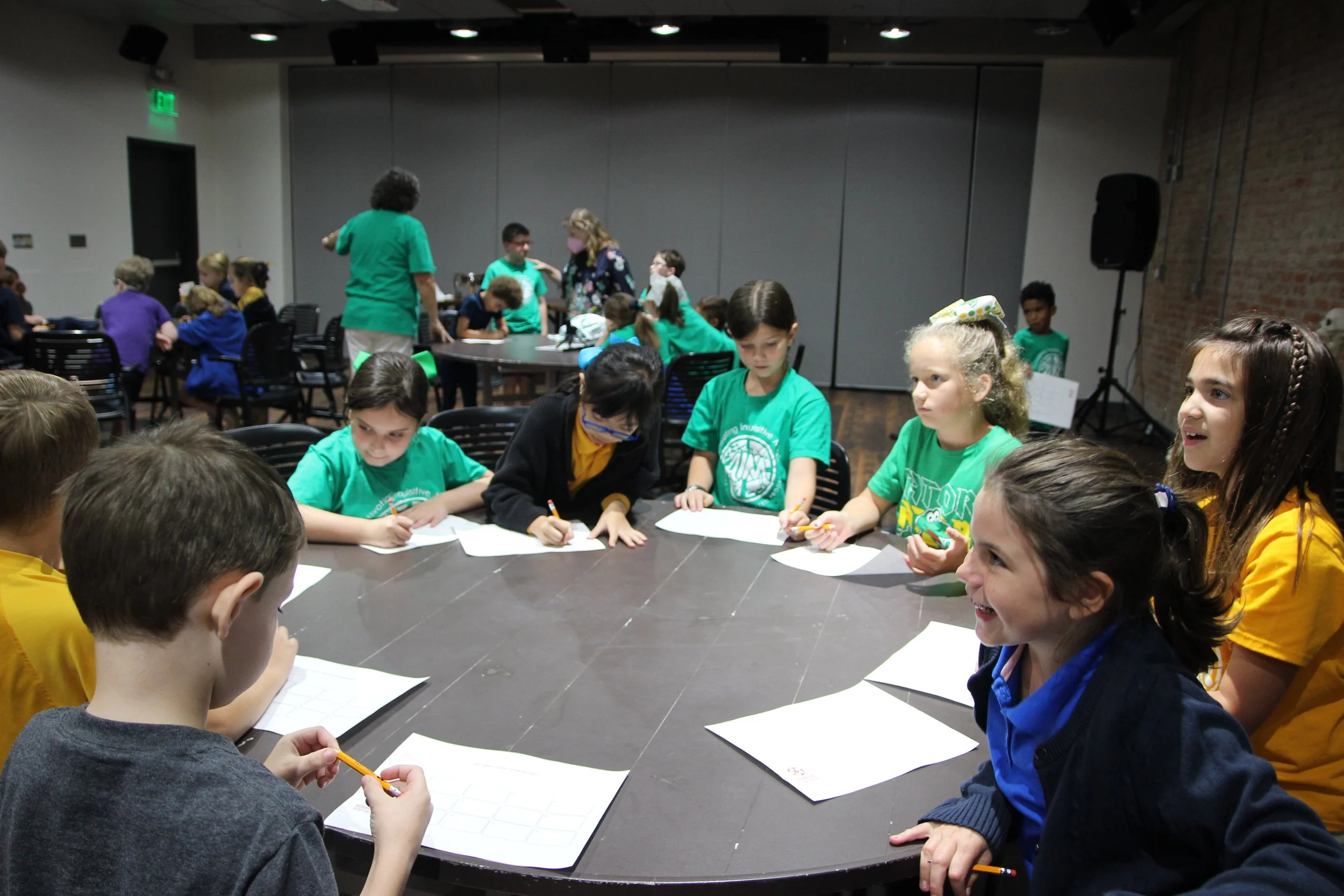
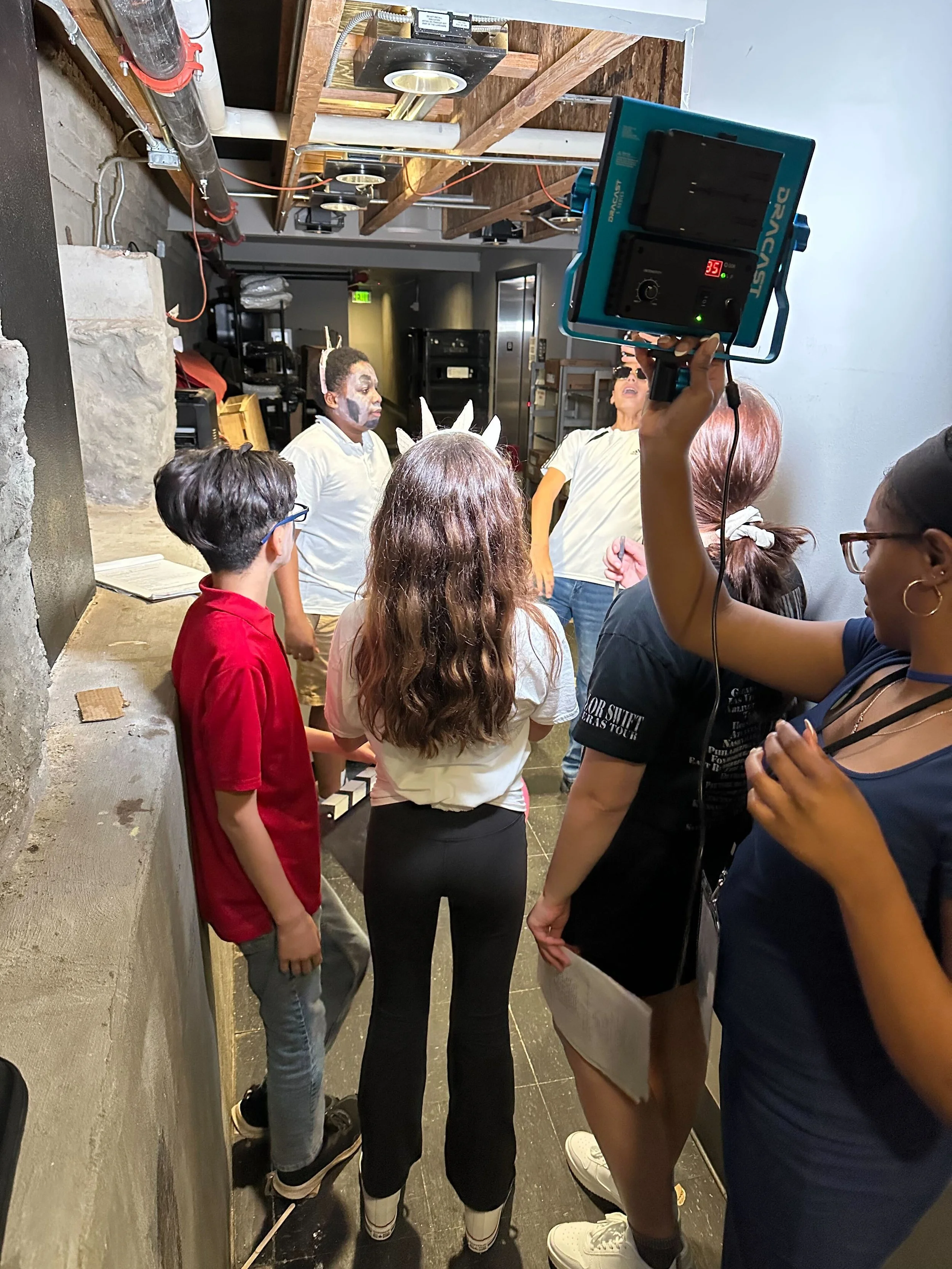
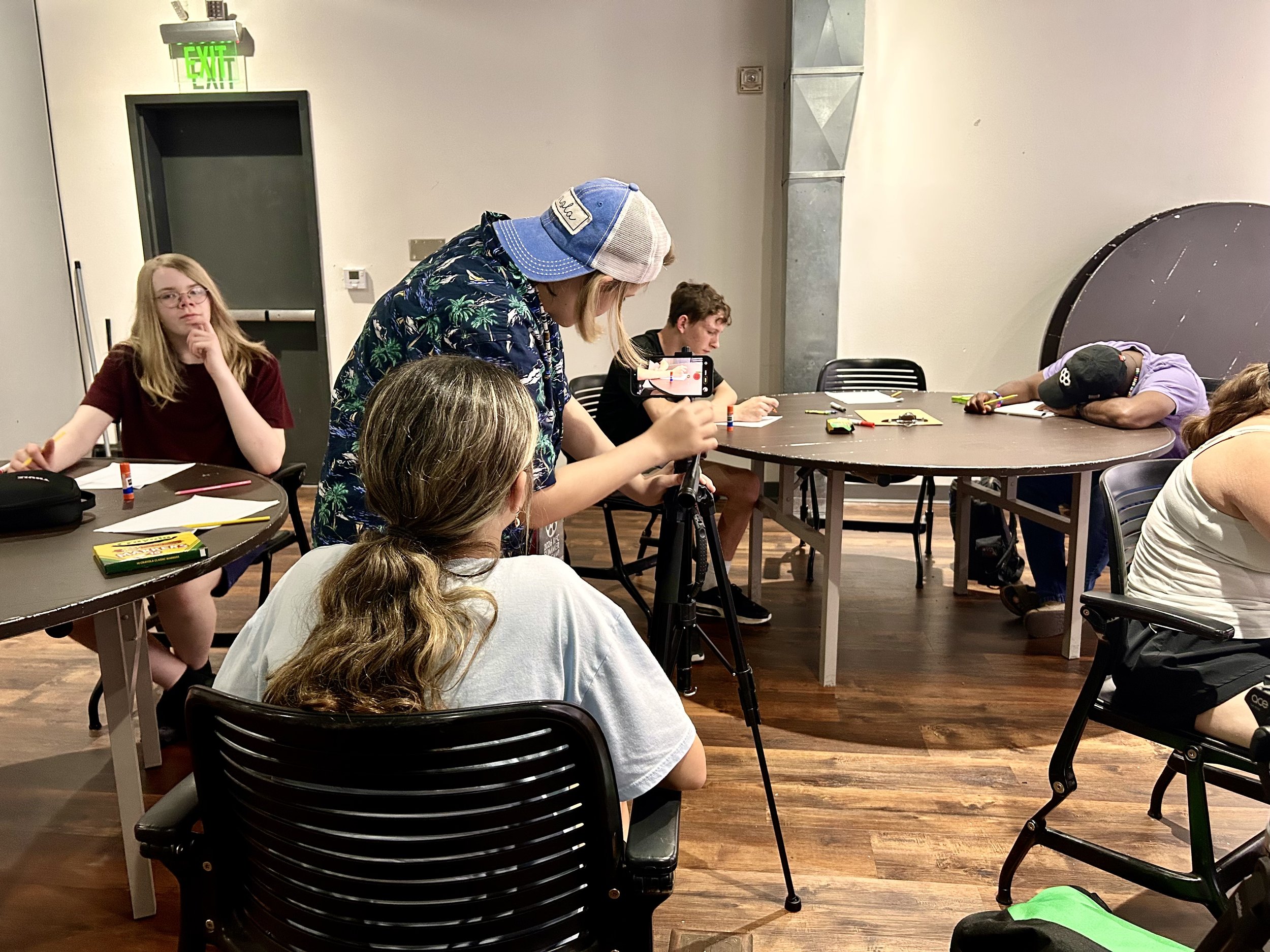
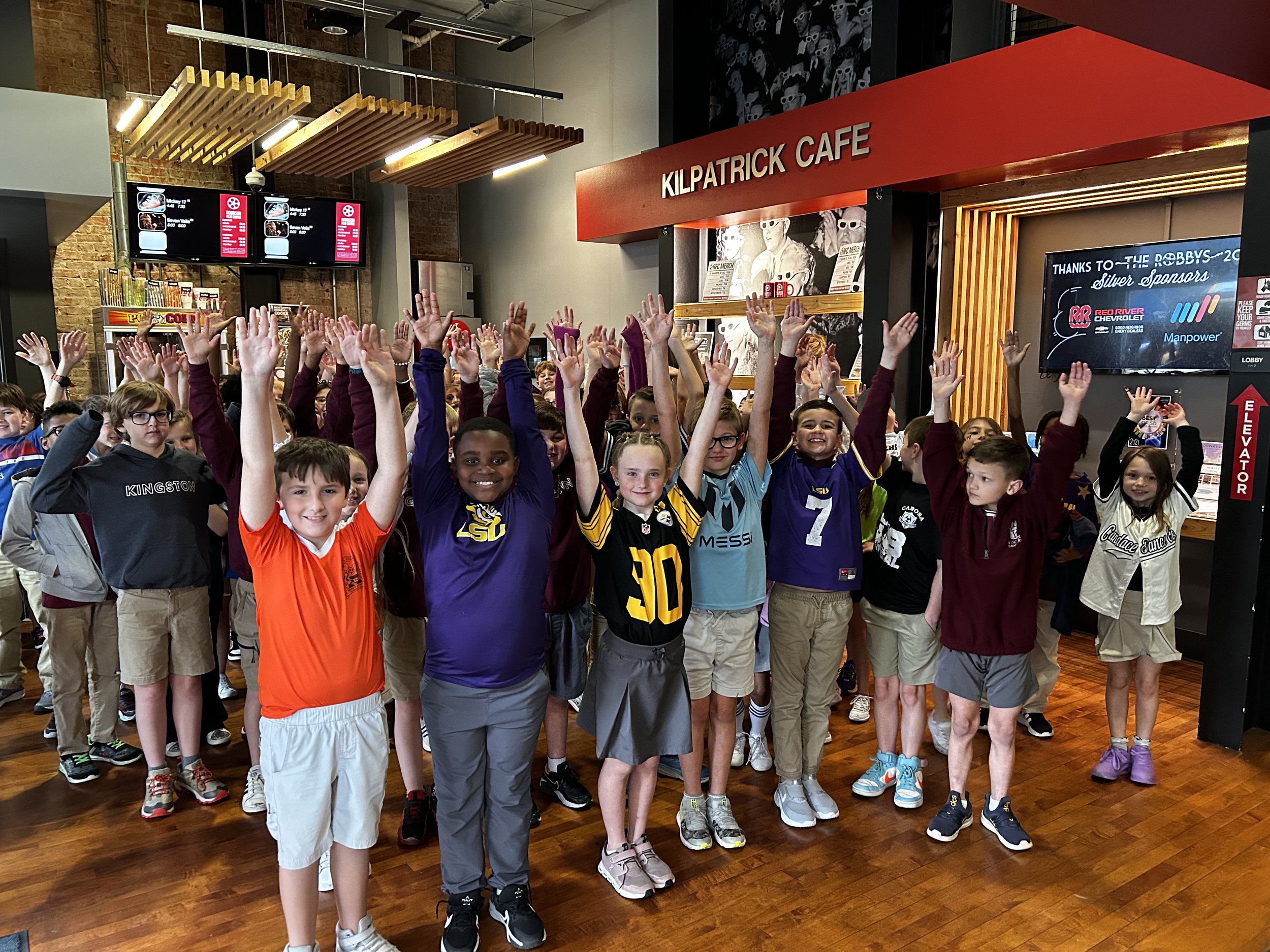
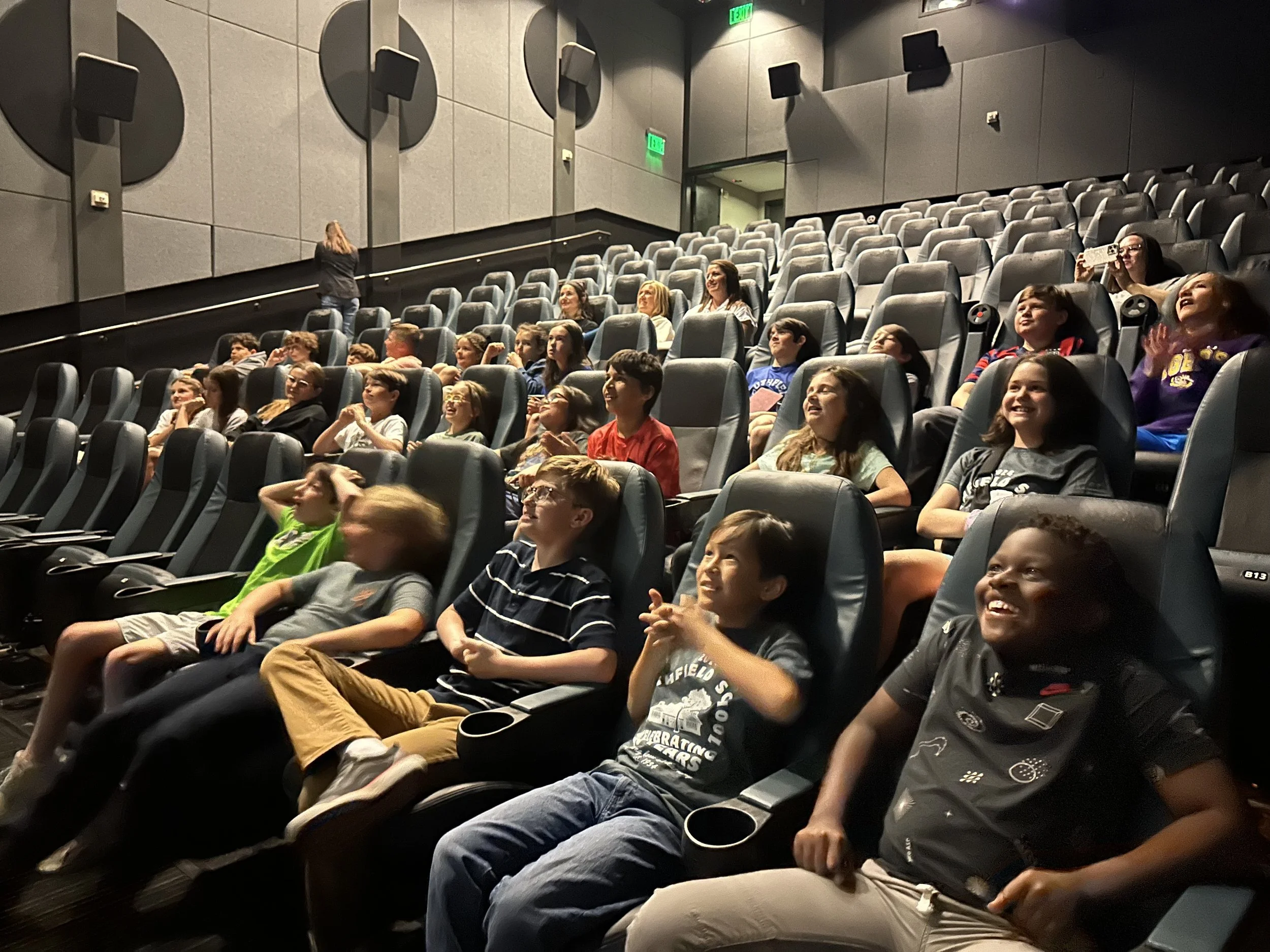
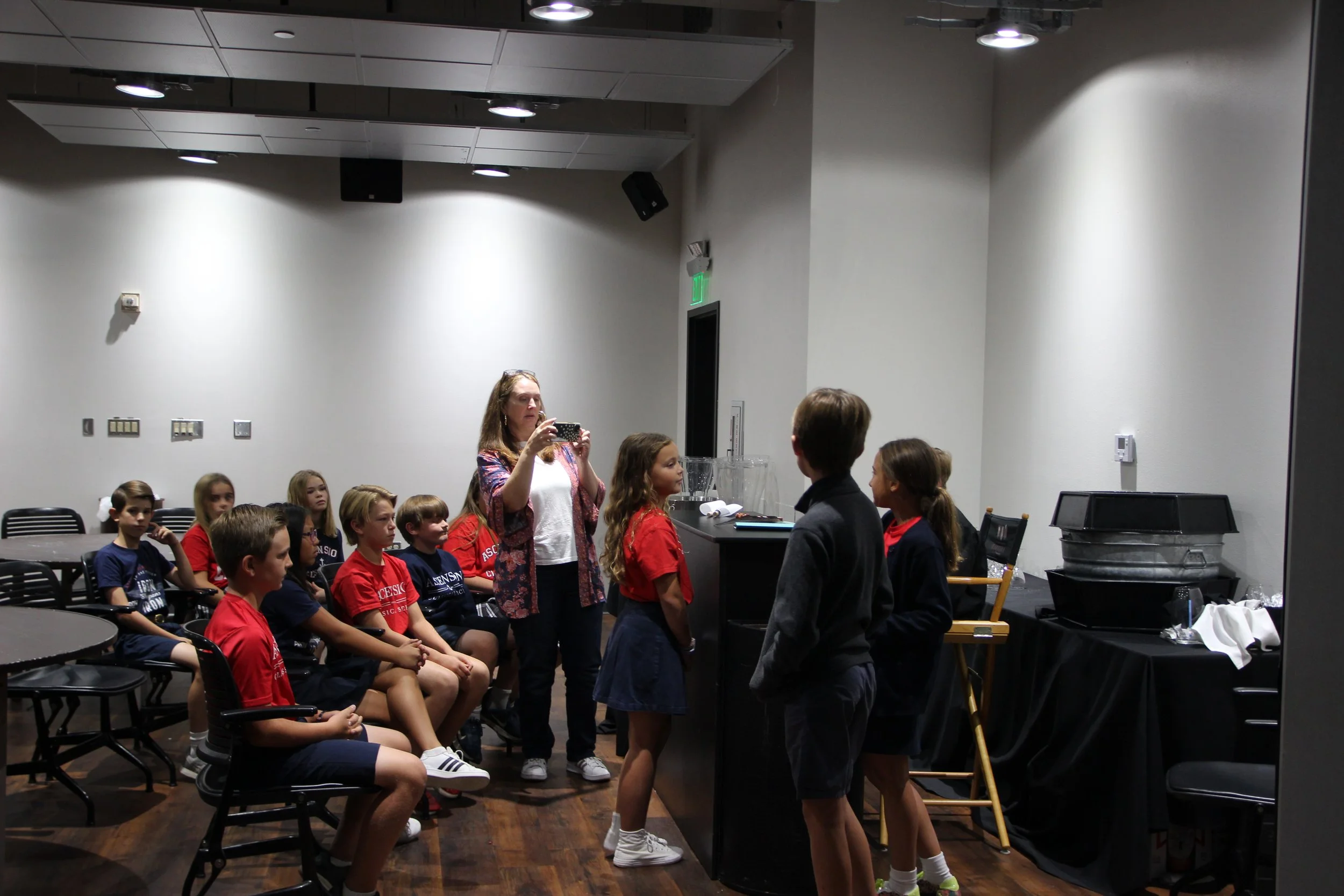
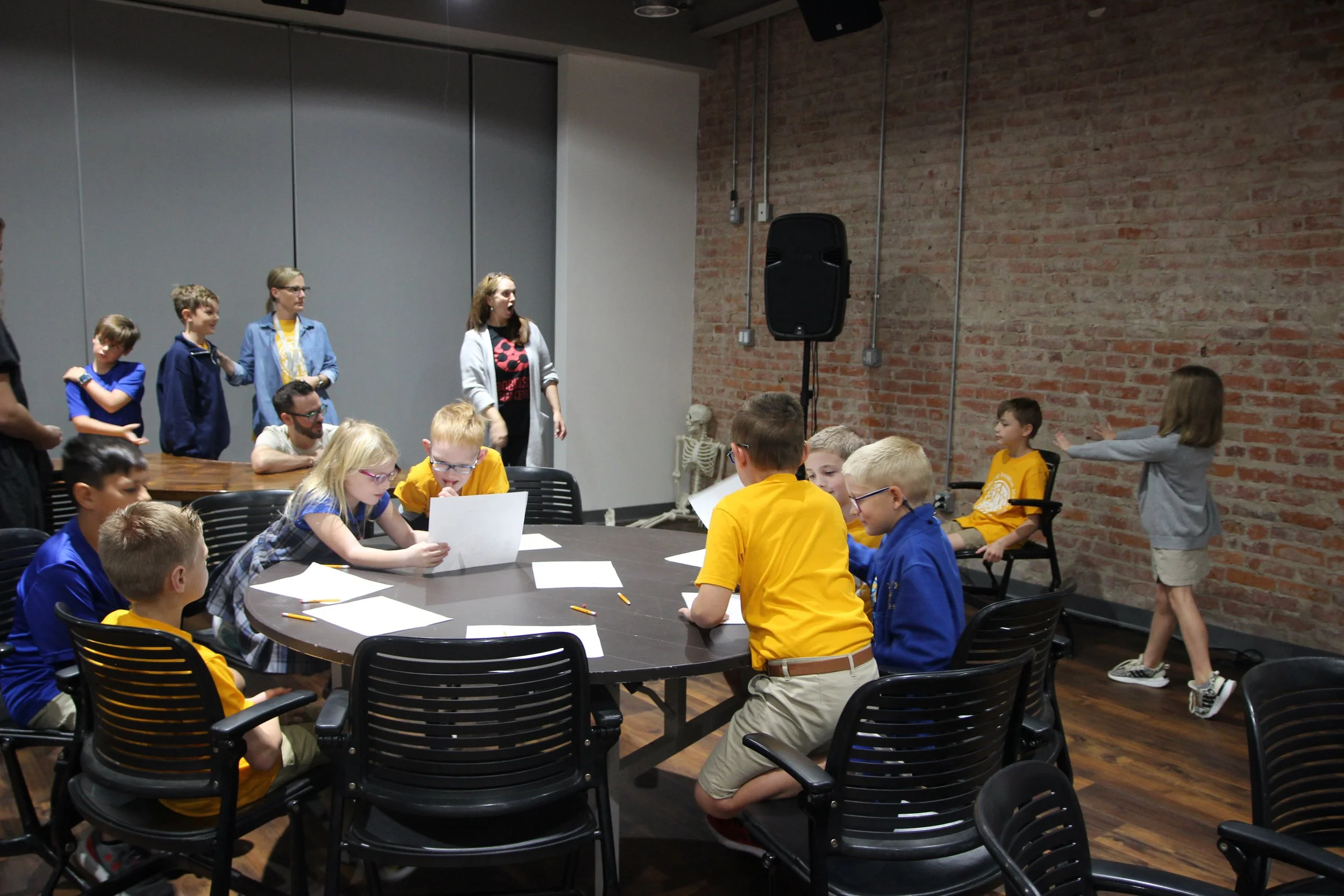
Robinson Film Center offers multiple film education programs for all ages, taught by industry professionals, providing a pathway that goes from basic film literacy to specialized training and workforce development. Our education programs include field trips, workshops, and school visits for K-12 students in the region, Summer Film Camps for elementary, middle, and high school-aged children, Teen Film Council, a no-cost after-school program designed to prepare high school students for careers in the film industry, and workforce development programs for adults.
RFC also offers educational programming. Regional Filmmakers Spotlight is an ongoing series showcasing talent from our region with engaging filmmaker Q&A’s and other special screenings feature community discussions with subject-matter-experts.
For more information about booking a workshop or field trip, workforce development, or submitting a film for Regional Filmmakers Spotlight series, contact RFC’s Director of Education, Rich Hansil at 318.459.4112 or rhansil@robinsonfilmcenter.org.
THANKS TO OUR EDUCATION SPONSORS!


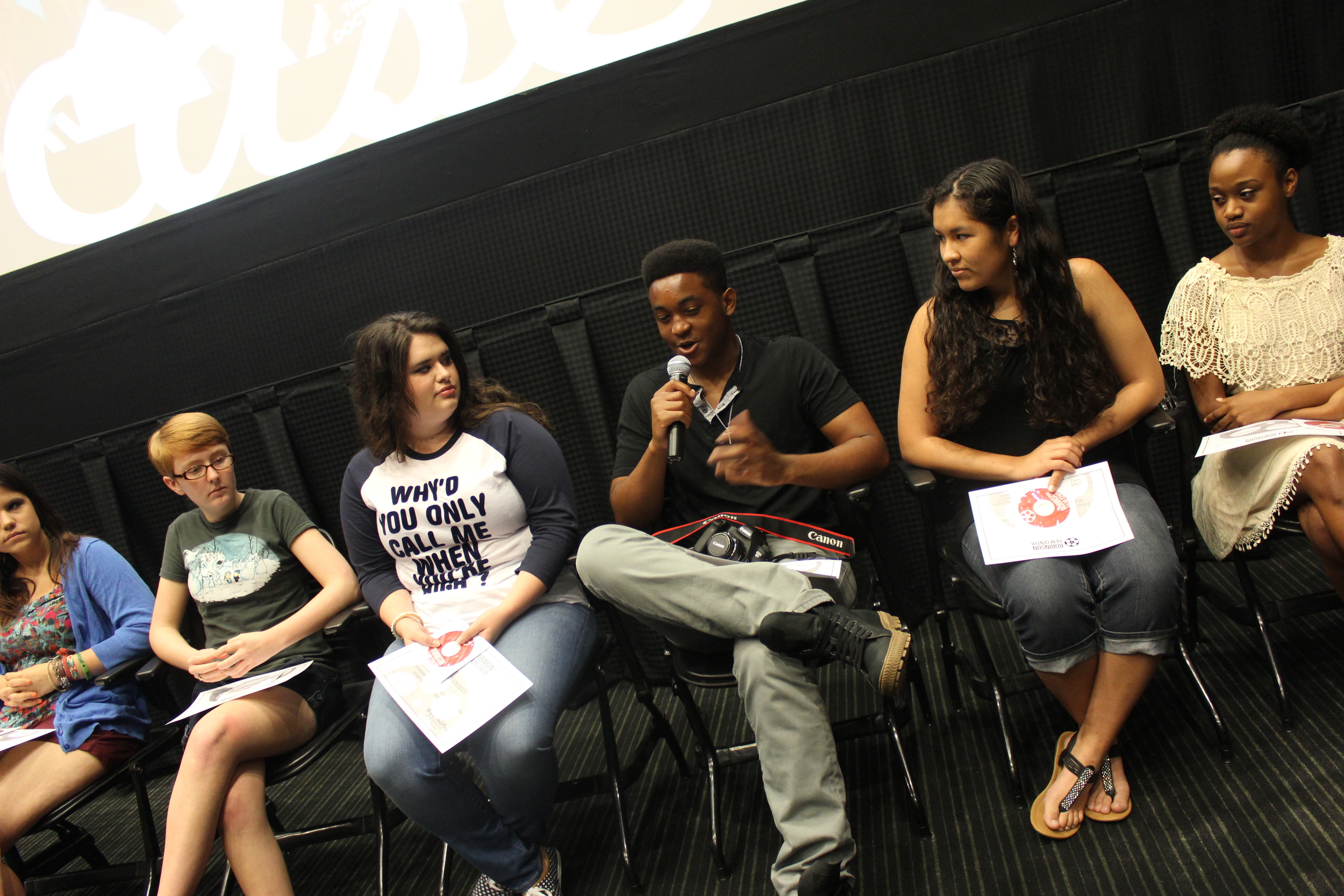
Teen Film Council
Fall Session:
Sept 14 - Dec14, 2026
Fall Registration Closed
Spring Session:
Jan 11 - May 3, 2027
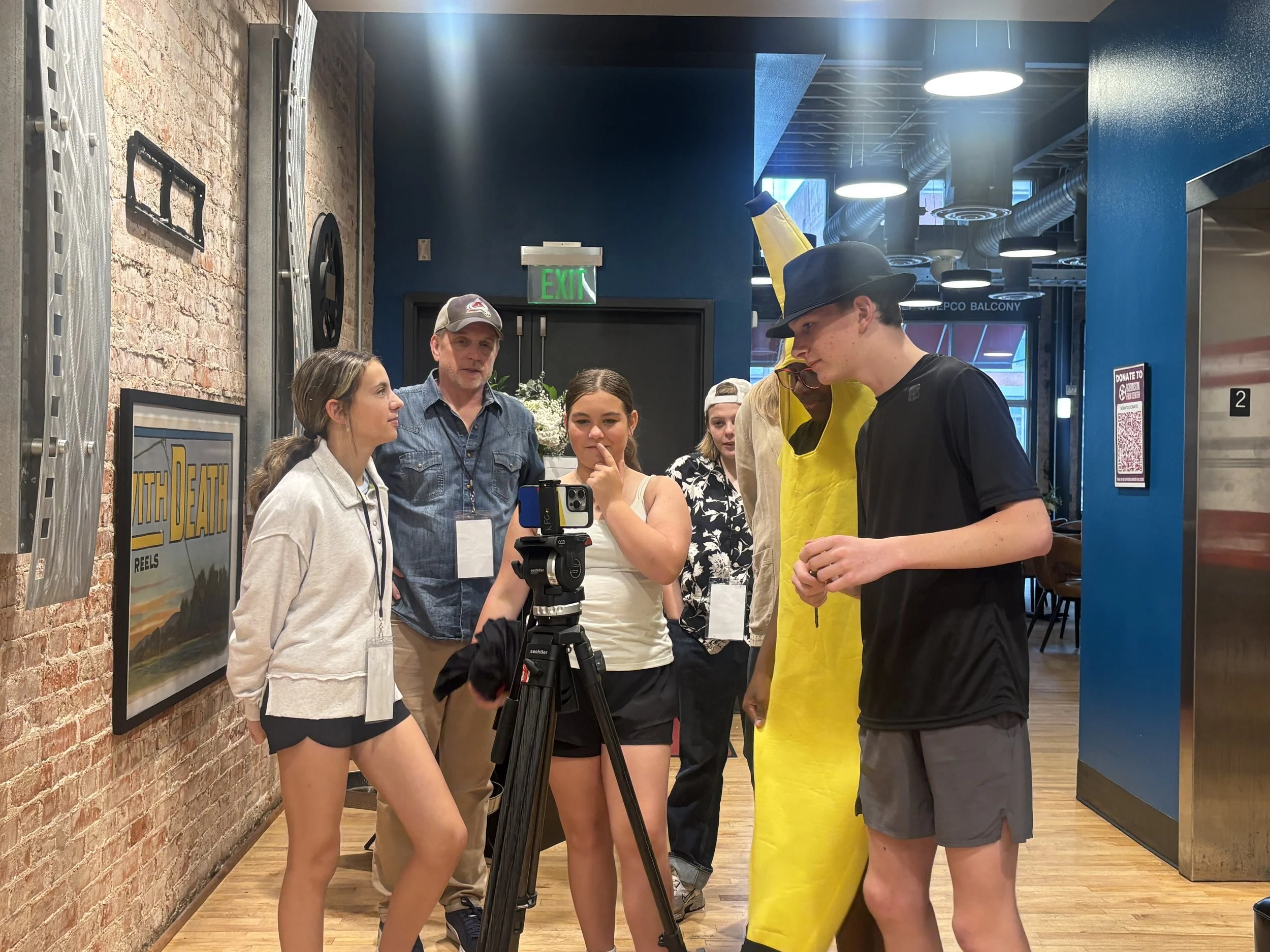
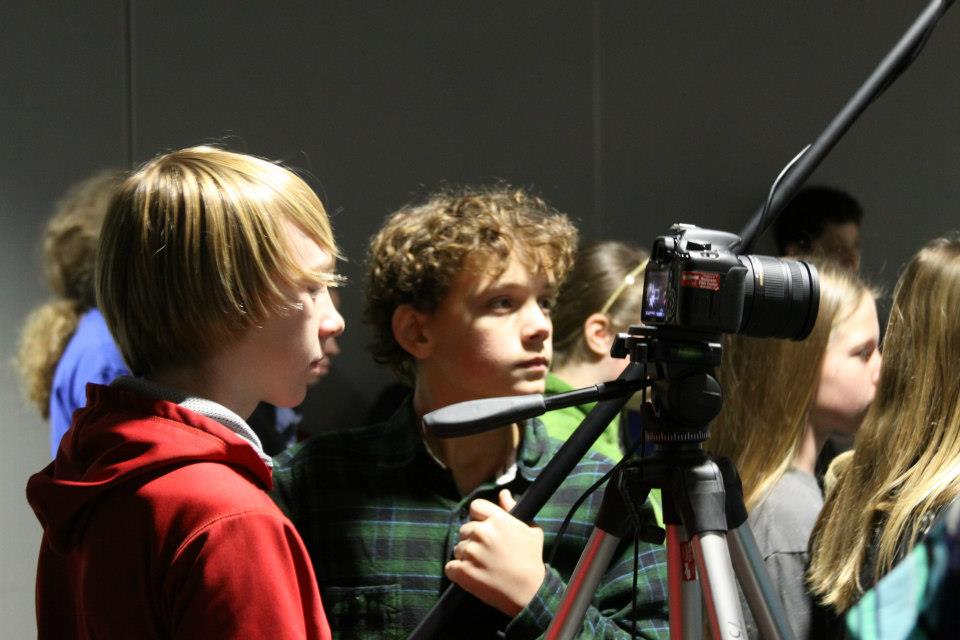
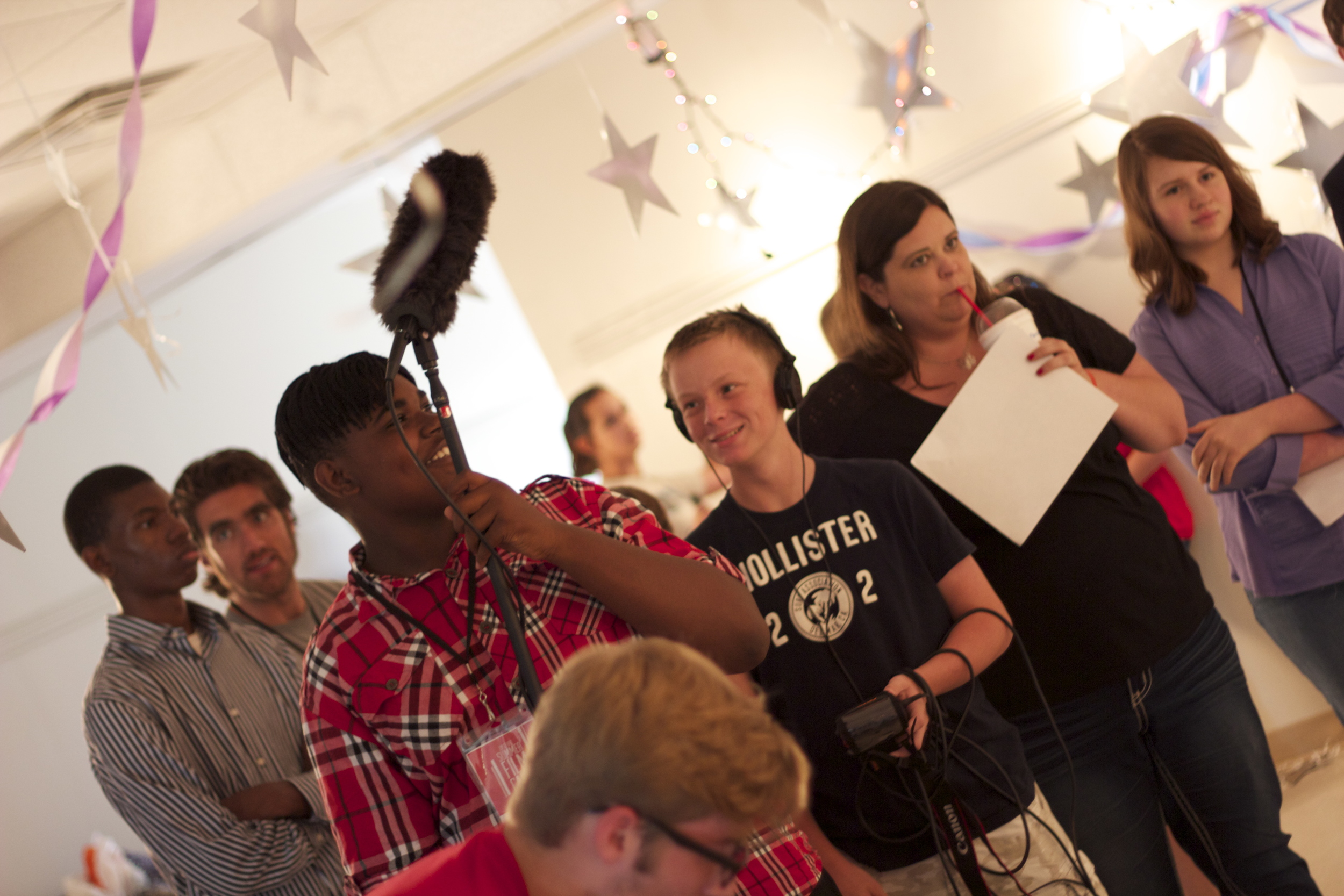
Robinson Film Center’s Teen Film Council is an in-depth filmmaking opportunity for high school students in grades 10-12, and we’re looking for young voices that love watching, talking and making films, seek art, and desire to build a community. This free class taught by entertainment industry professionals is a mixture of lectures, discussions, and hands-on activities in an informal environment.
This year’s students will make two short films (one scripted and one documentary), producing, serving as crew, marketing their films, and developing a festival strategy. On set and in the classroom, students will learn about all aspects of filmmaking, explore film history, program and market a film, and most importantly, learn to create, lead, and speak as a team of artists. Teen Film Council also features guest speakers from throughout the film industry.
Teen Film Council meets on Mondays from 4:30 p.m. - 6 p.m. at Robinson Film Center (excluding school holidays set by Caddo and Bossier Parish school calendars). There are no fees associated with this program.
Two 13 week sessions are offered - one in Fall and one in Spring. While there will be some repetition, students are welcome to apply for both sessions.
Summer Film Camps
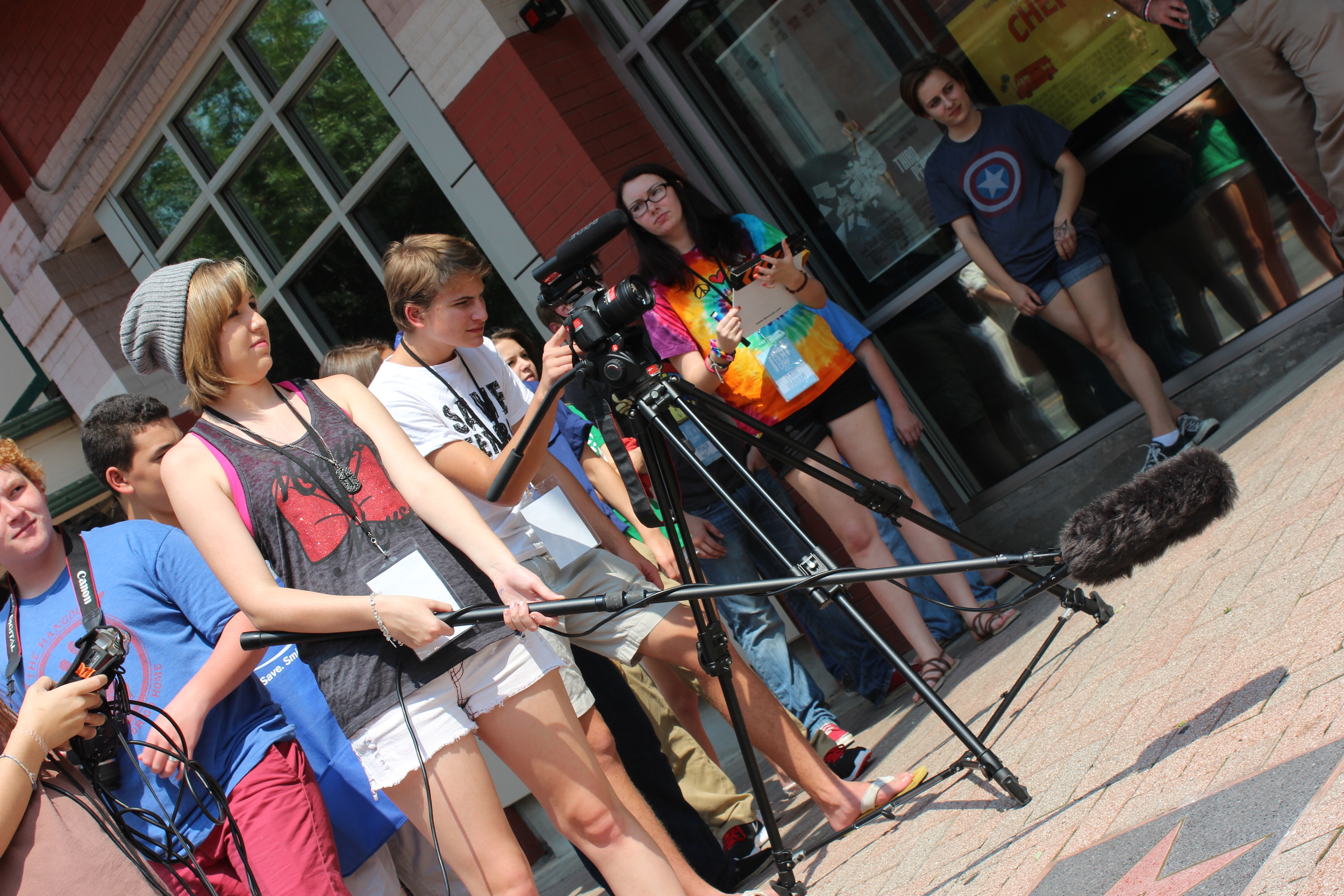
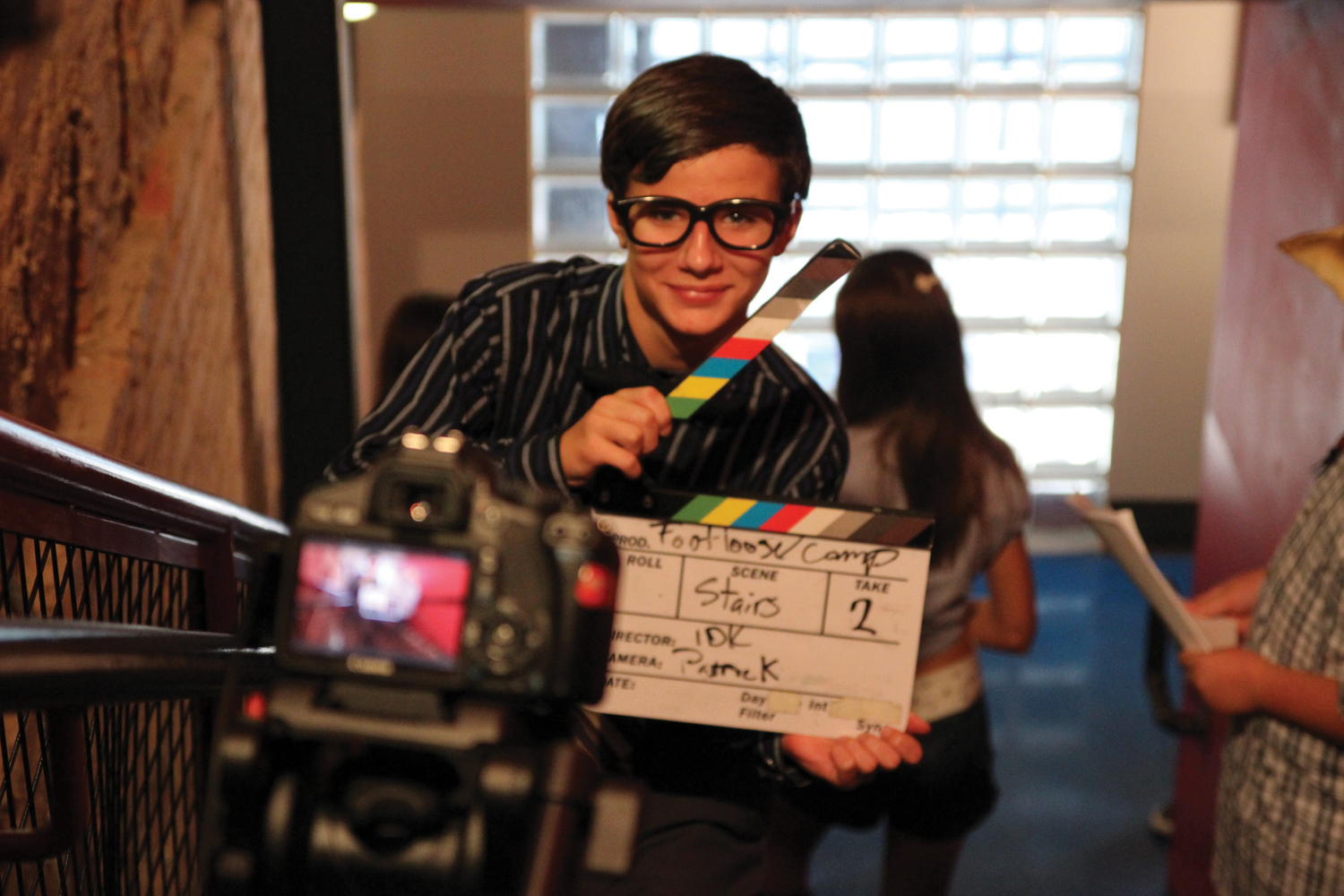
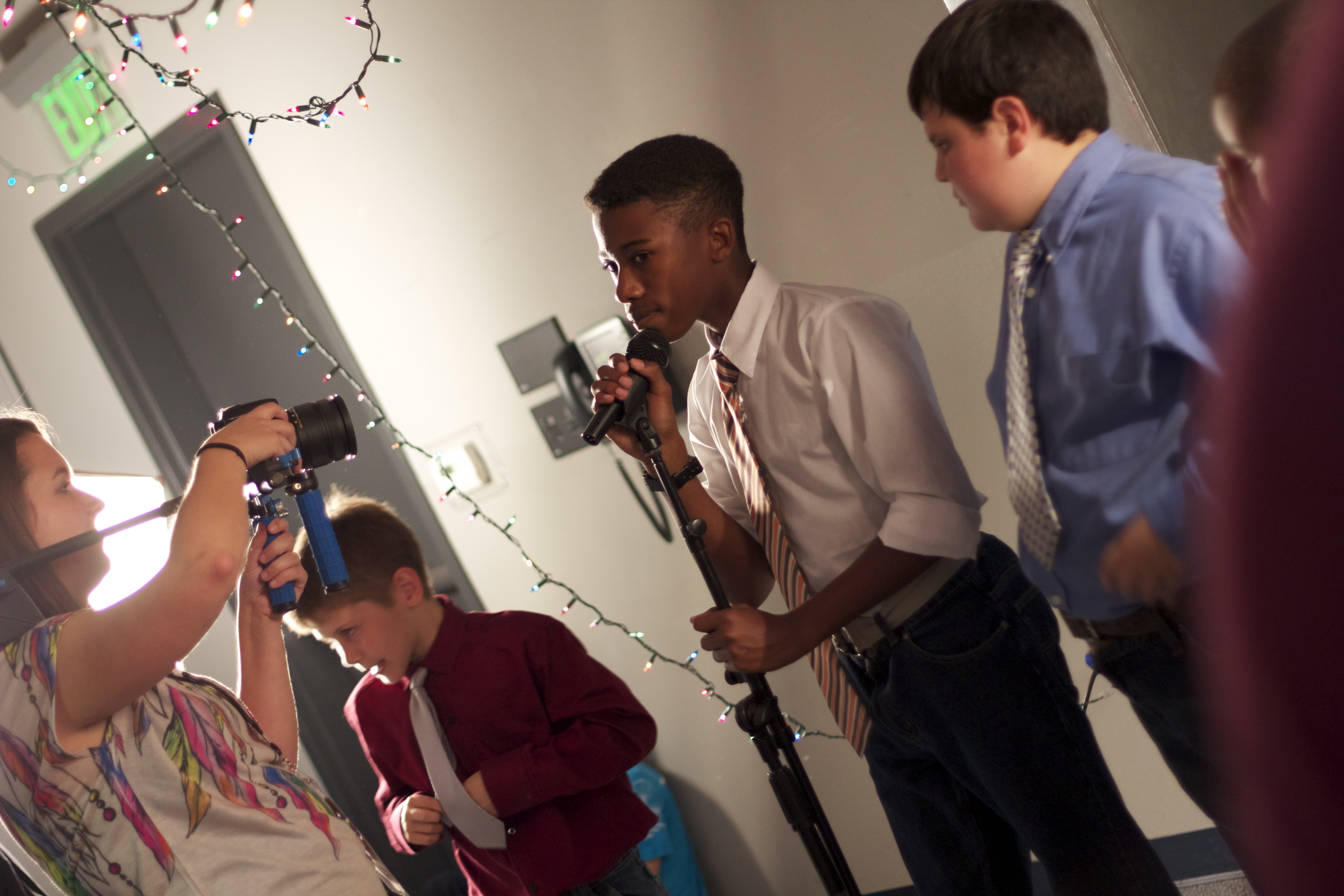
RFC’s Summer Film Camps are designed to ignite creativity, build real filmmaking skills, and inspire the next generation of filmmakers! In our week-long camps, students will learn skills from story development and scriptwriting to filming, acting, editing, and everything in between to create a short film. Friends and family are invited to see their campers’ hard work on RFC’s big screen at the end of the week. We can’t wait for budding filmmakers to unleash their creative potential at our Summer Film Camps!
A selection of themed camps (including our new Acting Camp!) are available each summer, lead by industry professionals and educators.
Held 1-5 p.m. daily at Robinson Film Center, 617 Texas St, Shreveport
Workforce Development
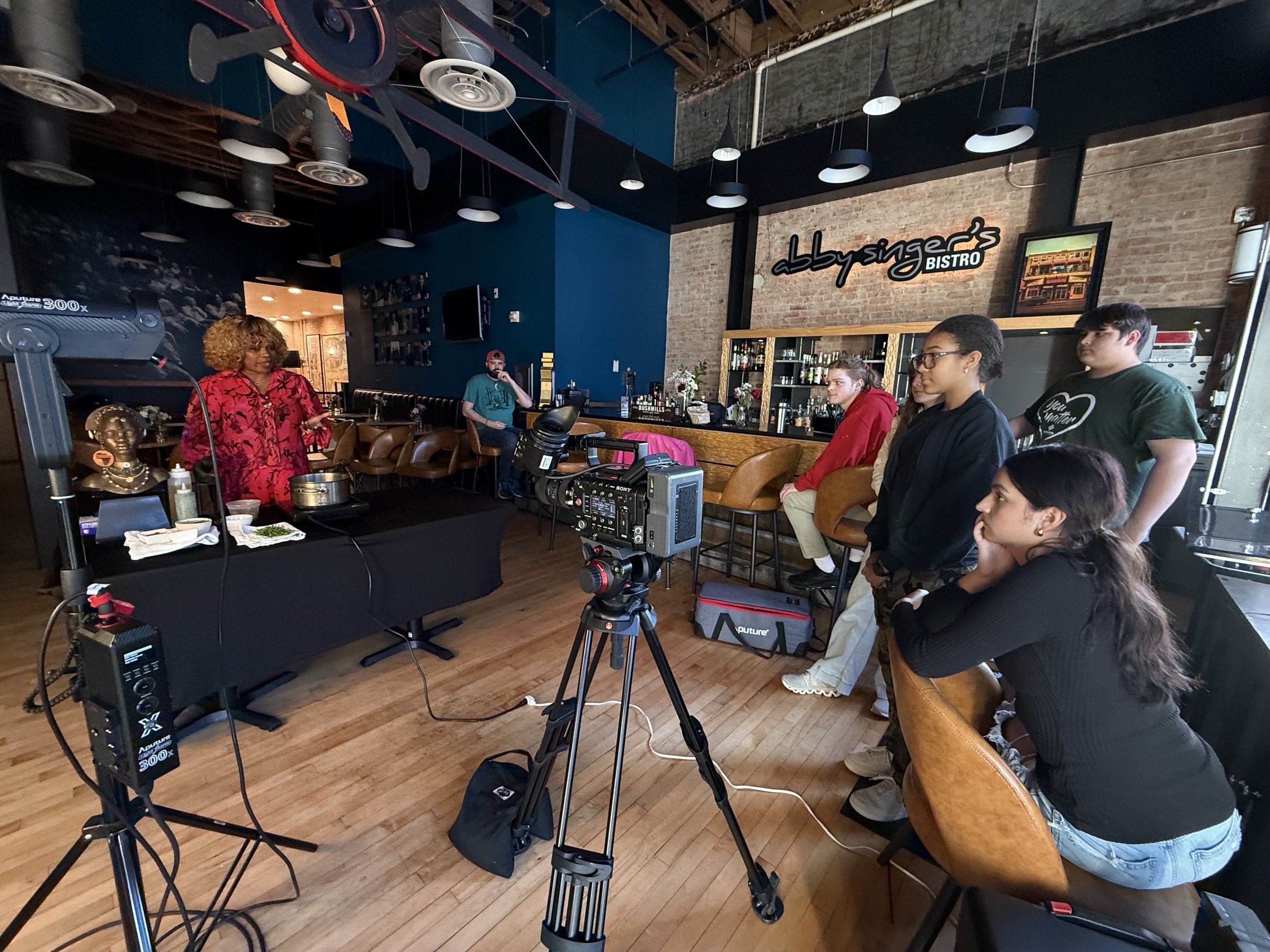
The Robinson FIlm Center teaches a variety of programs during the year that are geared towards developing Northwest Louisiana's film and television/media workforce. From general industry knowledge to classes developed to get adult learners on set and working, each class is taught by working industry professionals with deep experience on set, in Post, and in the production office. In addition to our planned slate, the RFC education team is also able to customize classes for industry or student needs - if you're bringing a show to the region or just interested in a certain facet of the industry, reach out to us at rhansil@robinsonfilmcenter.org
Film Club at RFC
Have you always wanted to learn more about films and how they are made? Then RFC’s new Film Council for Adults is for you!
Modeled after our popular Teen Film Council, Film Club at RFC is the grown-up version for adults (18+) that want a place to learn more about the art and business of the film industry. We’ll show clips, get hands-on with film equipment, and discuss practice, theory, and industry trends. There will be 16 weekly sessions and classes are $20 each or $280 for the whole course and include one free movie ticket per week. Plus, since it’s for adults, there will also be a cash bar!
RFC’s Film Club will meet weekly on Sundays from 4:30 - 6 p.m. in Robinson Film Center’s 2nd Floor Event Space. Sessions will begin Feb 8, 2026 and continue through June 28, 2026, excluding holidays and Oscars night.
Workshops & Field Trips
Robinson Film Center’s Media Literacy Workshops are available for in-school visits, field trips to RFC and virtual programs. Contact Directors of Education, Rachael & Rich Hansil at 318.459.4112 or rhansil@robinsonfilmcenter.org.
English-Language Arts Programs
The Novel Experience
Recommended for English, film, drama classes
Grades 6-12
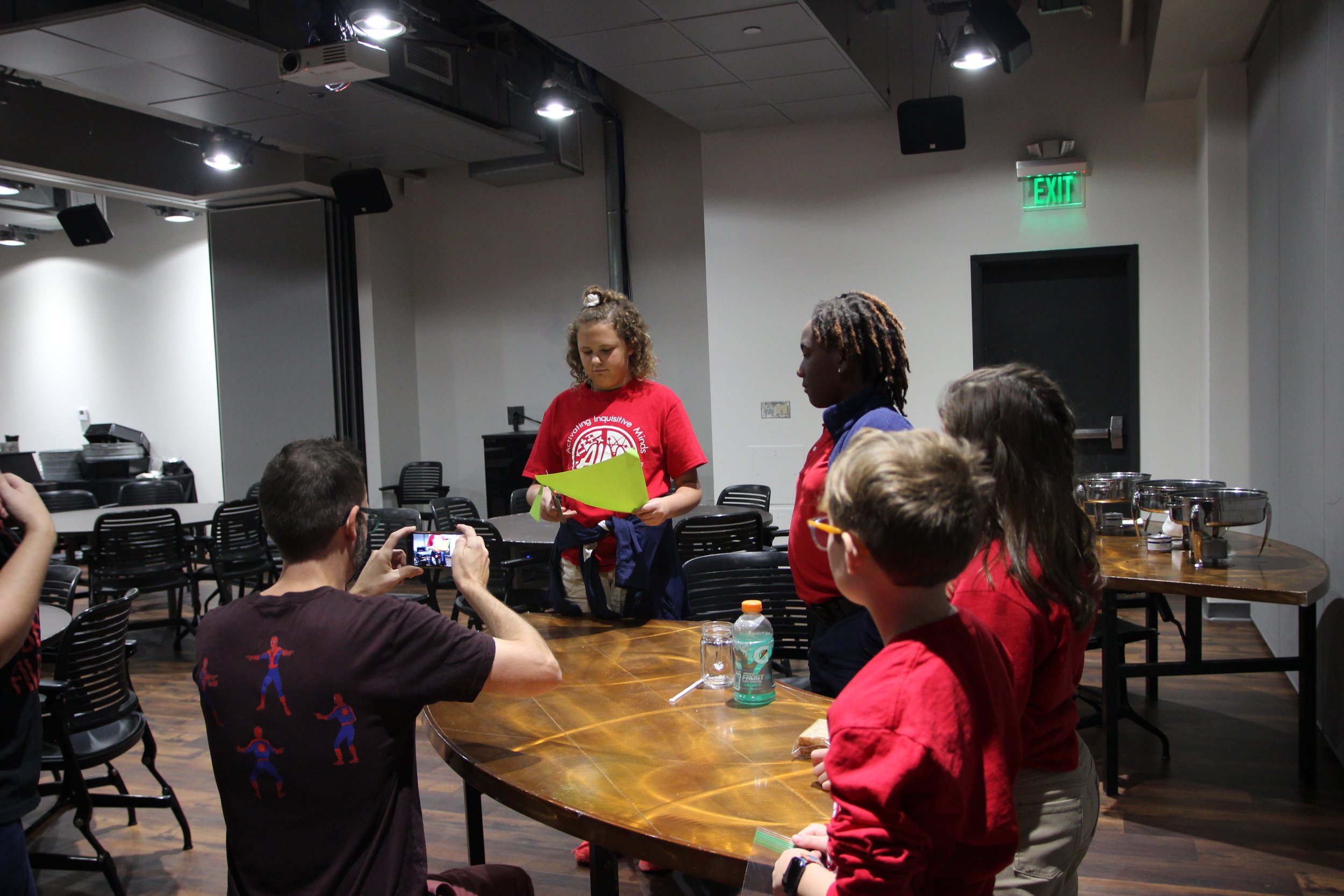
During one classroom session, students reading one of our selected novels or short stories learn to adapt one chapter into a short film. Students compare and contrast literary and cinematic terms, study how a novel’s story gets adapted into a one-page screenplay, and film and act in a short film. RFC education coordinator edits the footage during class and screens the final product with the students. (Please choose a work of literature from our list of titles.)
From Stage to Screen
Recommended for English, film and drama classes
Grades 6-12
In a modified version of The Novel Experience, students learn about the process of adapting a stage play into a film. Students compare the benefits and limitations of both stage productions and film productions. They discover how to best utilize the resources of filmmaking to transform a play for the big screen, as well as how to use the camera as a storytelling tool. (Please choose a work from our list of titles.)
Shakespeare in the Movies
Recommended for English, film and drama classes
Grades 6-12
This program is like From Stage to Screen but tailored specifically for plays by William Shakespeare. RFC’s education coordinator takes students on a journey through the history of Shakespeare on film, leads students in comparing and contrasting different filmmakers’ takes on the selected play, and directs the students in filming their own short movie based on a scene from one of our selected plays. (Please choose a work from our list of titles.)
Screenwriting Workshop
Recommended for film, drama, English and creative writing classes
Grades 6-12
In this workshop, students learn the basics of writing for film, such as character development, the three-act structure, how to write dialogue, and the proper format for a screenplay. Students watch examples of how screenwriting translates to the screen, then work on some short writing exercises independently, and finally collaborate as a class to write a one-page screenplay based on their in-class writing.
Film Studies Programs
Film Pioneers: Innovations of Sound and Color in Early Cinema
Recommended for film, drama, history and fine arts classes
Grades 2-12
With this multimedia presentation, students learn about the origins of cinema and experience, through classic film clips, early experiments with synchronized sound and color. Students travel through time from the first experiments in moving pictures in the 1600s, to the invention of film in the late nineteenth century, to the slapstick comedy classics of the late 1930s.
The Movie Musical
Recommended for film, drama, music, fine arts and history classes
Grades 2-12
When The Jazz Singer premiered in 1927 as the first talking picture and Al Jolson said, “You ain’t heard nothing yet,” the movie musical was born. In this multimedia presentation, students study the work of musical greats like Fred Astaire, Gene Kelly, Judy Garland and Julie Andrews. Students tackle such questions as, “How does a film musical differ from a stage musical?”, “How have movie musicals evolved from 1952’s Singin’ in the Rain to 2012’s Les Misérables?”, “How has La La Land embraced the movie musical genre expectations?”
Understanding the Oscars
Recommended for film and art classes
Grades 6-12
This series, written by the Academy of Motion Picture Arts and Sciences, dissects the Oscar categories and explores the art and science of movies. The activities are designed to teach valuable lessons in critical thinking and to develop visual literacy skills. Lessons are offered on the following topics: animation, cinematography, costumes and make-up, documentaries, film editing, media literacy, screenwriting, sound and music, and visual effects.
Social Studies Programs
Southern Cinema: Over a Century of Louisiana Films
Recommended for Louisiana history and film classes
Grades 8-12
From silent films to Steel Magnolias, this program covers all the famous films made in Louisiana plus many you’ve probably never heard of. Students also tackle such questions as “What sets our state apart from other filming locations?” “Why might today’s filmmakers choose to bring their productions to Louisiana?” and “What does all this mean for those of us who live here?”
The Living Room Candidate: Presidential Campaign Commercials
Recommended for American history, civics and film classes
Grades 6-12
From the Museum of the Moving Image comes a lesson on presidential campaign ads that teaches students to think analytically about the visual messages they see. In The Living Room Candidate, students examine the historical context of former political ads, evaluate what makes an effective political ad, and learn how to be critical viewers of presidential campaign commercials by analyzing the use of images and sounds.
Elementary School Programs
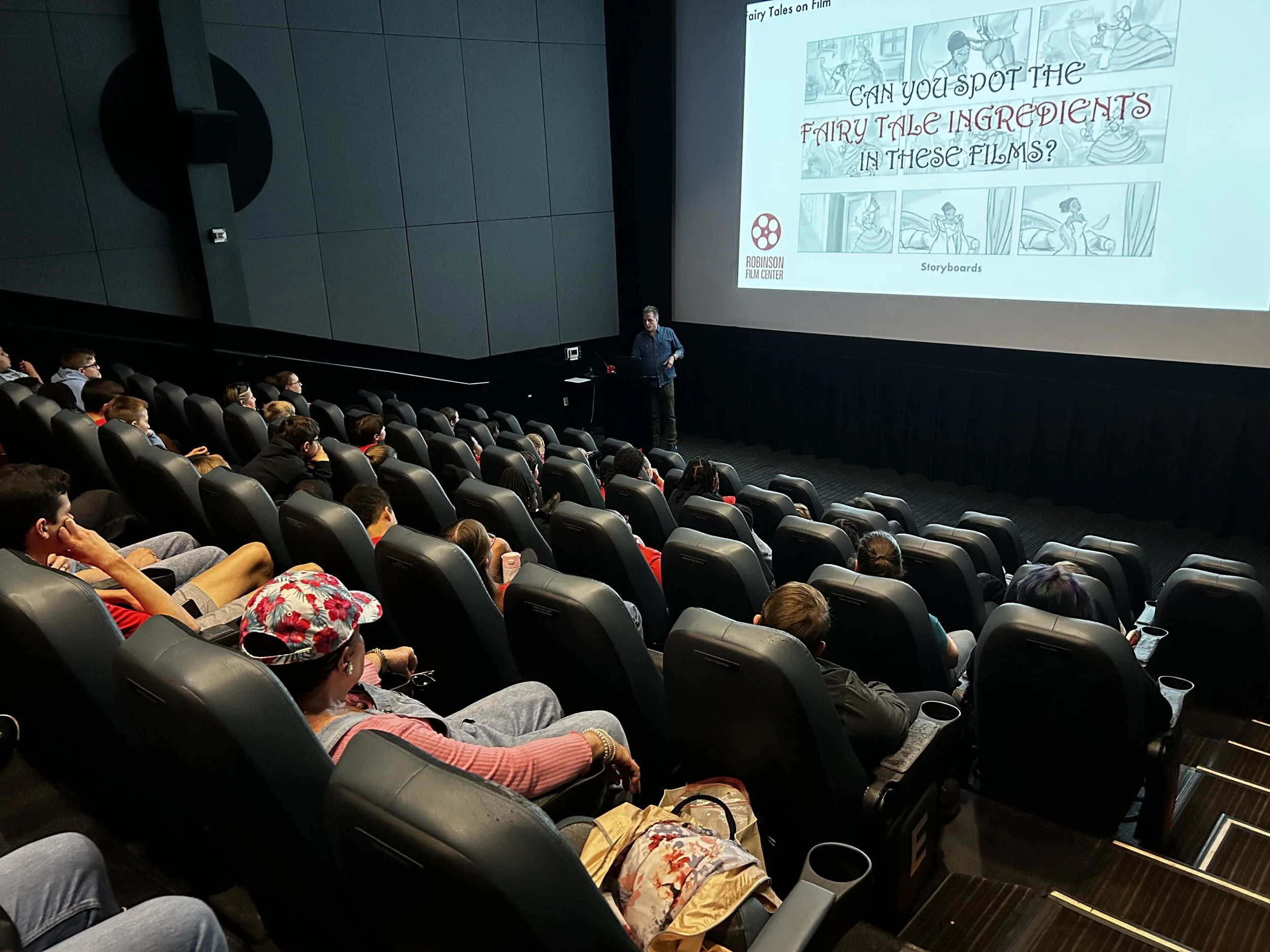
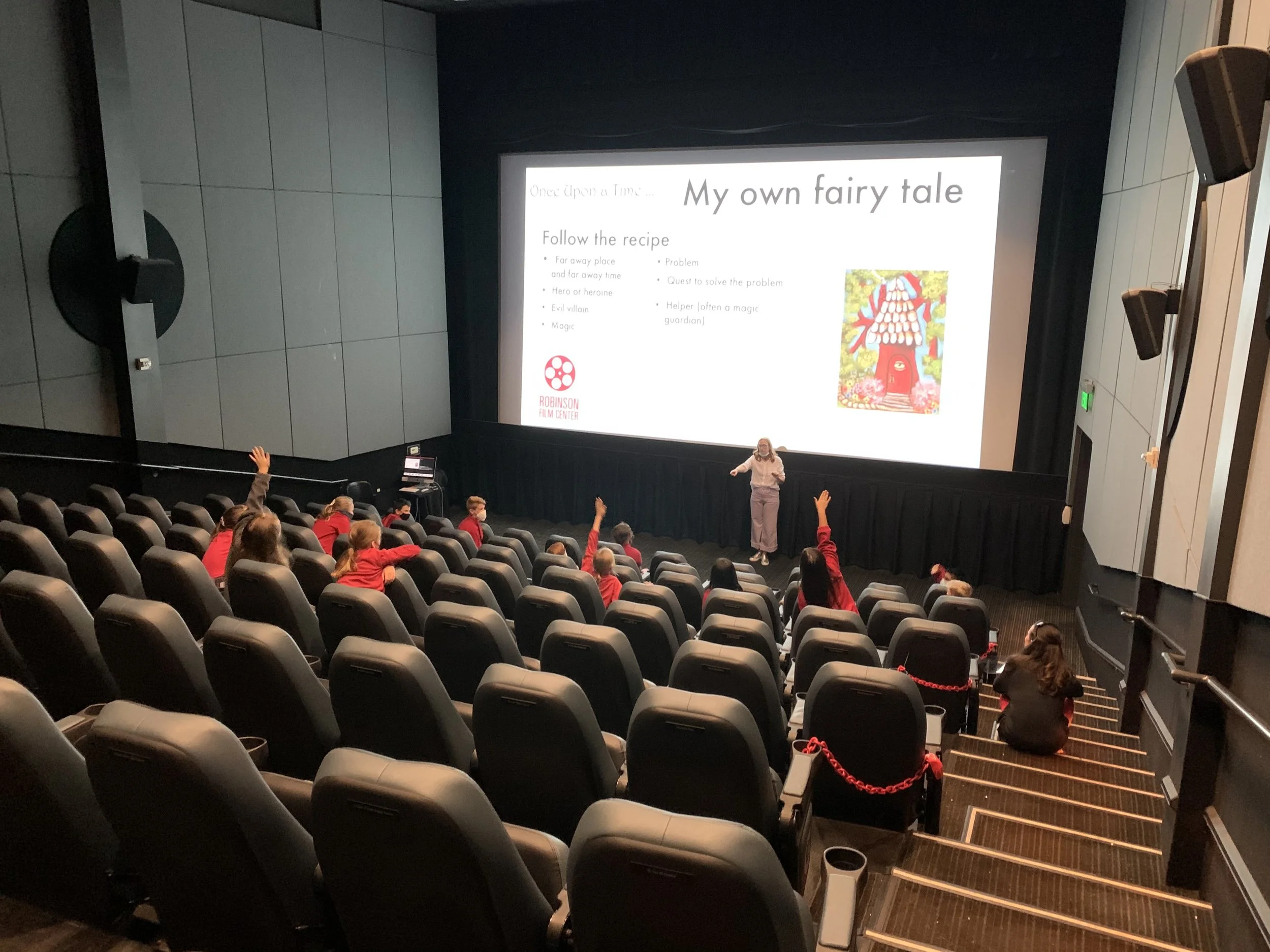
Fairy Tales on Film
Recommended for all language arts classes as well as Gateway, Discoveries and AIM classes
Grades 2-5
This multimedia program is designed specifically for grades 2-5. Students hear a short history of fairy tales and learn the “ingredients” that go into all fairy tales. They are then challenged to recognize these fairy tale ingredients in film clips of non-traditional fairy tale films. The program ends with students taking the ingredients they have learned and cooking up their own original fairy tale on an RFC storyboard.
Cinemagic: The Films of George Melies
Recommended for all language arts classes as well as Gateway, Discoveries and AIM classes
Grades 2-5
Known as the father of special effects, George Melies invented many camera tricks that are still used today. In Cinemagic, students view several of Melies’ fanciful films and then try out some of his movie magic tricks such as making someone disappear into thin air! Our RFC education coordinator teaches students how to use simple effects invented by Melies. This program pairs well with a study of the book or film Hugo.
Virtual Field Trips
Made Possible by the Grayson Foundation
RFC’s Virtual Field Trips, made possible with support from the Grayson Foundation, explore culturally relevant sites throughout north Louisiana. This film series explores the history and significance of these locations, paired with post-viewing assignments available for use in the classroom. Current episodes include:
R.W. Norton Art Gallery
Oakland Cemetery
The Port of Caddo-Bossier
For free access to this series, please contact Directors of Education, Rachael & Rich Hansil at 318.459.4112 or rhansil@robinsonfilmcenter.org.